

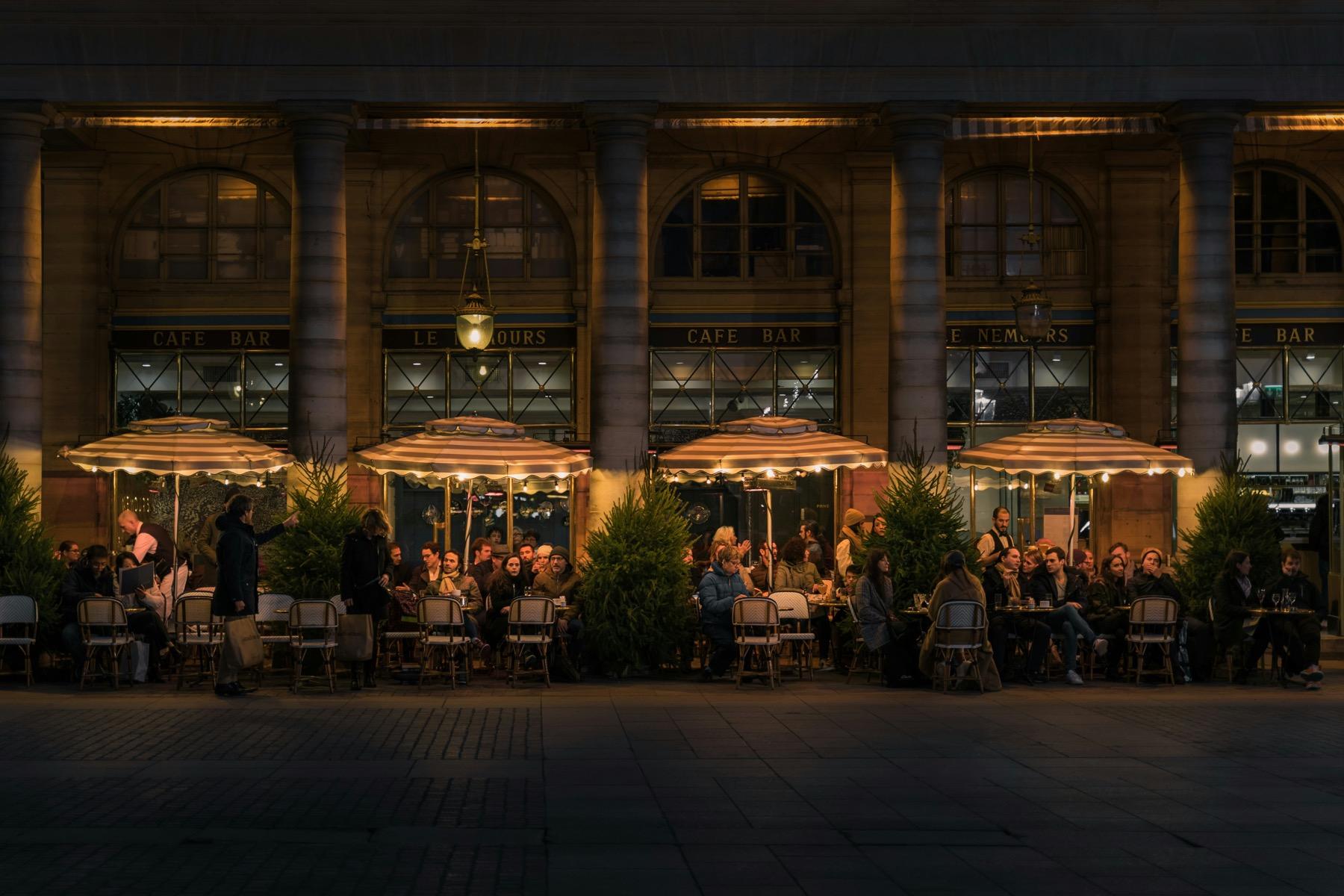
RESTAURANTS & RETAIL
Restaurant & Retail Photometric Plans.
Parking area and site perimeter lighting documentation for commercial tenant improvements, pad sites, and new retail construction.
THE REQUIREMENT
What the code requires and why.
0.5-1.0 fc
Parking area minimum (typical)
15:1
Uniformity ratio
Full cutoff
Fixture classification (typical)
Restaurant and retail photometric plans are typically required when a tenant improvement, pad site development, or new construction triggers site plan review. The lighting submittal needs to document parking area visibility, pedestrian safety at building entries, and property-line compliance, often within a larger multi-tenant development where adjacent parcels have their own lighting conditions.
Many retail jurisdictions also enforce design guidelines that limit fixture height, require shielding, or mandate consistency with an existing development's lighting standards. The photometric plan has to satisfy both the municipal code and any privately recorded design covenants that apply to the parcel.
Standard commercial parking criteria typically apply: maintained minimums of 0.5-1.0 fc in parking areas, uniformity ratios of 15:1 or better, and full-cutoff or BUG-rated fixtures to control uplight and property-line spill.
WHAT YOU RECEIVE
Your restaurants & retail photometric package.
01
Site plan overlay with fixture locations for parking, entries, and pedestrian paths
02
Point-by-point foot-candle grid across customer parking and building frontage
03
Property-line light trespass calculations for adjacent parcels and public frontage
04
Fixture schedule with distribution type, wattage, mounting height, and shielding data
05
BUG and cutoff documentation where required by the jurisdiction or design guidelines
06
Compliance summary referencing municipal code and any applicable design covenants
07
Two revision rounds for plan review comments or fixture changes
All plans modeled in AGi32 using IES LM-63-19 photometric data files.
COMPLETE DOCUMENTATION
Your restaurants & retail permit may also require:
Restaurant and retail permits often combine interior tenant improvement lighting with exterior site lighting in one submittal. Energy code documentation must cover both the interior space and the parking area, even when only the exterior triggers the photometric requirement.
Load Calculations
NEC Article 220 electrical load analysis covering interior fixture circuits and exterior site lighting as a combined connected load for the electrical permit.
COMcheck Compliance
Energy code compliance certificate documenting both interior and exterior lighting power density against the building type's watts-per-square-foot allowance per IECC or ASHRAE 90.1.
Permit Coordination
Assistance assembling the combined interior/exterior lighting submittal package and coordinating with the plan reviewer, especially when tenant improvement and site plan reviews run in parallel.
Controls: interior dimming and scene control, exterior scheduling, daylight harvesting where applicable.
Need the complete package? We scope everything together — one fee, one timeline, one point of contact.
APPLICABLE STANDARDS
Code references for restaurants & retail lighting.
- ANSI/IES RP-8-25
- Current IES recommended practice for roadway and parking facility lighting; applicable to retail parking and site circulation.
COMMON QUESTIONS
Common questions about restaurants & retail.
Whenever a tenant improvement, pad-site build, or new construction triggers site-plan review and the scope touches exterior lighting—new, replaced, or significantly modified. The submittal has to document parking visibility, pedestrian safety at entries, and property-line compliance, often inside a larger development with its own recorded lighting standards.
Retail lighting design spans interior merchandising, signage, and storefront character. The photometric plan is narrower and permit-focused—the calculated parking and site-perimeter grids the jurisdiction reviews. For most pad sites and tenant improvements, the exterior photometric plan is the piece that has to clear review, and we keep it manufacturer-agnostic.
Standard commercial parking criteria usually govern: maintained minimums around 0.5–1.0 fc, uniformity of 15:1 or better, and full-cutoff or BUG-rated fixtures to control uplight and spill. Many retail jurisdictions and private design covenants add fixture-height and shielding rules on top, which the plan documents alongside the municipal code.
Most single-site retail plans run $300–$900 at 48-hour standard turnaround, rush available. Send the site plan or tenant layout and we confirm scope and a fixed fee, usually the same day.
RELATED READING
Keep reading
- Light trespass explainedHow property-line spill is measured and capped at shared lines.
- Dark-sky ordinances explainedCutoff and BUG rules common in retail design guidelines.
- What is a photometric plan?The full deliverable, with an annotated sample plan.
- How much does a photometric plan cost?The honest $300–$2,500 range and what moves it.
- Foot-candle requirements by property typeTypical IES-based maintained fc ranges for every property type.
Scoped to your restaurants & retail project.
Every restaurant and retail plan is scoped to your site layout, parking area, and jurisdiction requirements. Send the site plan and we'll confirm the scope and fee, typically same day. No obligation.
Learn about our pricing model →Need a Retail Lighting Submittal?
Send the site plan, tenant layout, or existing background set. We'll prepare a permit-ready photometric package.